Too Much Knowing: Rereading Nicholas Carr in 2025
When Nicholas Carr published his article “Is Google Making Us Stupid?” back in 2008, he voiced a worry that felt both personal and prophetic: that his mind, once capable of settling into the slow rhythm of a book or the unbroken focus of long reading, had been rewired by the jumpy, hyperlink-driven logic of the internet, leaving him restless, impatient, and distracted. At the time, this felt like a startling diagnosis of a culture on the brink of transformation, but reading it now, nearly two decades later, the concern almost seems modest compared to the world we actually inhabit — for if Carr feared that digital media might erode our capacity for depth, today it seems just as urgent to consider how it has overwhelmed us with breadth, saturating our days not with silence or absence, but with too much knowing, too much noise, too much of everything.
“Immersing myself in a book or a lengthy article used to be easy.”
It is no longer the case that we simply struggle to focus on a single book; instead, we are expected to follow countless unfolding narratives at once. Political upheavals, viral trends, celebrity scandals, economic forecasts, weather alerts, personal messages, breaking news from a dozen time zones, and the curated fragments of thousands of strangers’ lives, all arriving not in sequence but simultaneously, layered together in the same glowing rectangle that we use to work, relax, argue, shop, confess, and escape. To live in this torrent of constant awareness is to feel not only informed but also weighted down, as though knowledge itself has become less a gift than a burden we are forced to carry everywhere we go.
Marshall McLuhan once wrote that “the medium is the message,” suggesting that technologies don’t just deliver information but actively reshape the ways we think, feel, and live. That insight, often quoted but rarely lived with, feels especially sharp when applied to social media, which has perfected the art of collapsing categories that once gave our lives structure and proportion. Within a single scroll, we are asked to move from war updates to skincare tutorials, from climate disasters to cat videos, from intimate confessions to glossy advertisements, all flattened into the same visual space, given the same visual weight, demanding the same flicker of attention, until the distinction between the urgent and the trivial, the serious and the ridiculous, begins to dissolve altogether. The result is not wisdom, not perspective, not clarity, but a pervasive exhaustion, the mind stretched so thin that it no longer knows how to prioritise, how to care, or even how to rest.
“The more they use the Web, the more they have to fight to stay focused on long pieces of writing.”
The sociologist Erving Goffman once described social life as a stage on which we perform different roles for different audiences, but he could hardly have imagined how thoroughly the “front stage” would invade the “back” in the age of Instagram and TikTok, when even the supposedly private corners of our lives are curated for consumption, turned outward, polished and captioned until the distinction between authenticity and performance seems almost impossible to maintain. What was once ordinary, a meal, a workout, a holiday, a passing mood, is now endlessly reframed as content. Psychologists call the resulting malaise normative discontent and social dysmorphia, a term that captures the creeping dissatisfaction born from comparing our unfiltered selves to the curated illusions of others, but the phrase, clinical as it is, barely conveys the depth of the ache that comes from living inside a world where everything feels staged yet nothing feels secure.
And this culture of performance extends far beyond appearances, shaping not only how we present ourselves but also how we work, spend, and imagine our lives. Productivity culture insists that every waking hour must be optimised for output, even as burnout rates continue to climb. Consumerism, once tied to specific purchases, has become a lifestyle logic in which every choice, from groceries to travel, is transformed into a marker of identity, while financial tools like “buy now, pay later” schemes encourage us to consume at a pace that outstrips not only our resources but our capacity to savour. Even experiences once reserved as rare pleasures are increasingly performed not for our own memory but for the lens of others, until the performance itself begins to feel truer than life, and life without performance feels oddly incomplete.
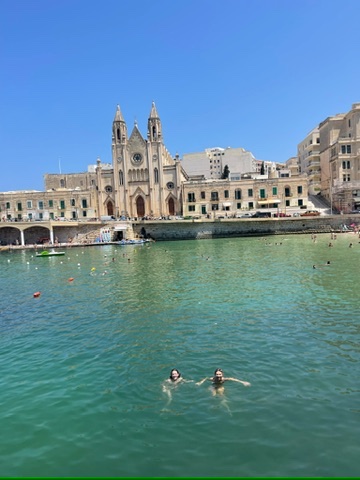
I was reminded of this myself one summer afternoon, lying on a beach, surrounded not by curated backdrops or Instagram stories but by the textured, imperfect details of ordinary human life: swimsuits faded from too many washes, shoulders awkwardly streaked with sunburn, paperbacks swollen from the sea, laughter that left no digital trace. It was all so unremarkable in one sense and yet, precisely because it was unstaged, so rich in another – more alive, more present, more grounding than anything I had seen online for months.
And this, I think, is the paradox of our moment: the more desperately we try to know everything, the less capable we become of noticing anything, the more information flattens our days into a blur, the more attention, simple, undivided, unmonetised attention, restores the vividness of the world. The solution is not to retreat into ignorance, nor to reject technology altogether, but to practice simplicity and creativity. Refusing the algorithm’s demand for endless engagement, refusing the culture of comparison that insists our worth must always be measured against others, refusing the seductive but dangerous assumption that more knowledge automatically equals more meaning.
Carr worried, back in 2008, that the internet was making us shallow, stripping away the depth of our thought; but perhaps the deeper danger, here and now, is that in our scramble to know it all, to see it all, to carry the weight of the world in our pockets, we risk failing to notice the life directly in front of us — and that, in the end, would be the most devastating loss of all.
 BEYOND THE WORD