A love letter to the countryside

The countryside is where the inspiration I’ve gathered in London finally has the space to bloom. There’s a kind of quiet clarity to it, a slowing down that gives form to ideas only half-formed in the city’s rush. It always brings to mind that moment in Atonement when we first meet Cecilia: running through the wild grounds of her family estate, slightly lost after university, unsure of what comes next, thinking of the cigarette burns in her dresses, nights out with friends, and books she has read, waiting for life to begin again. That image has stayed with me for years, a portrait of someone on the edge of becoming. There wasn’t a single character I felt more drawn to in the final years of secondary school, and subsequently, each summer throughout university.
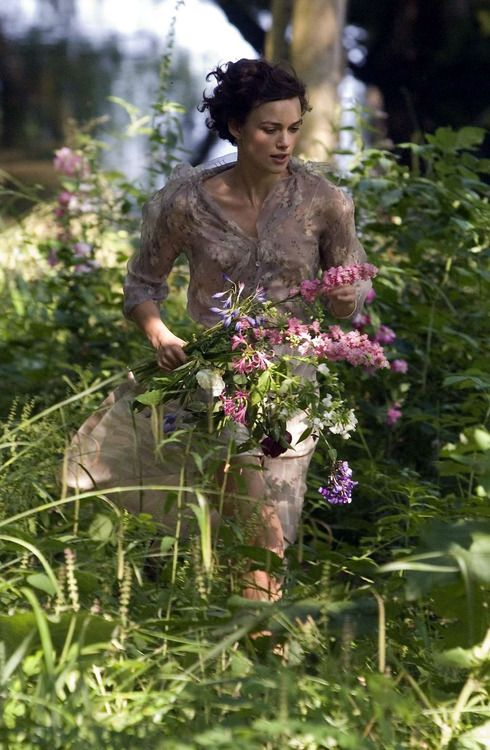
Being home before moving out made me feel like I was a teenager again, waiting for life to begin, but actually, I now come back to experience that very feeling, to give my mind space to wander. I’ve recently been feeling ‘itchy’, as I keep telling everyone, itching to be outside, to explore, to be off my phone, to write, to read, to feel sun, sea, sand… basically to not be in London.
I’d been circling around the feeling for a long time, trying to find the correct way to put it into words. And then I came across fashion designer Brunello Cucinelli speaking about his life in the hills of Umbria, and suddenly it all clicked. Cecilia wasn’t necessarily waiting for life to begin; she was adapting to a slower pace, something that I have recently realised how much I need in my life.
In an era obsessed with speed, efficiency, and scale, Brunello Cucinelli’s world feels like a slow exhale. Nestled in the Umbrian hills of Italy, his life and work unfold in deliberate rhythms, closer to the rustle of olive trees than the rush of quarterly reports and KPIs to make an office worth swooning over. In a recent GQ interview, Cucinelli spoke not only of his motivation to make clothes but of philosophy, kindness, elegance, and something increasingly rare: the courage to live well, slowly.
La Vita Lenta. The slow life. The Italian concept of savouring every moment, appreciating simple pleasures, and finding joy in the present. Spending hours at lunch, socialising, going on long walks – all to find beauty in the mundane.
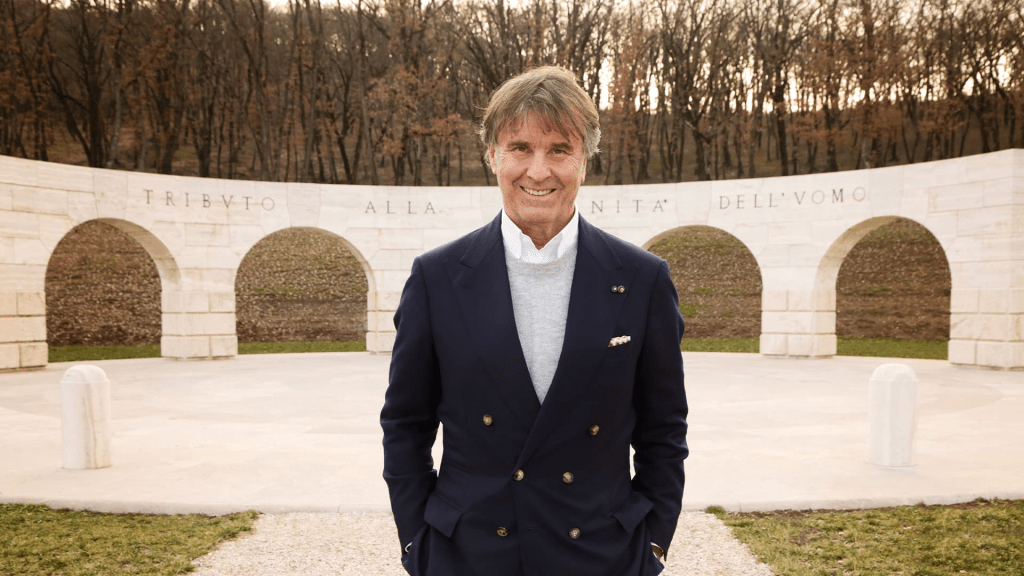
He’s not merely designing clothes but a way of life. One that offers, not escapism, but a return to stillness, to meaning, to what Jean-Jacques Rousseau might have called the natural state of being – something that has led Cucinelli to be called the ‘fashion philosopher’, which seems an accurate description if you just take a look at the website. This humanistic capitalism is something Cucinelli has written about extensively, and for a designer who creates clothes for the top 1% and mingles with the elites, the beginning of his life in the countryside in Castel Rigone seems to shine through all that he believes in and manages to keep a guy that hosts Jeff Bezos and Mark Zuckerberg somewhat grounded.
Rousseau, writing in the 18th century, famously said, “Man is born free, and everywhere he is in chains.” His philosophy wasn’t a rejection of civilisation, but a plea for rebalancing: a life attuned to nature, inner truth, and quiet reflection. He longed for the countryside not out of pastoral fantasy, but because that’s where the self could be heard again – something reflected in Cucinelli’s way of working.
“On the days when I see nobody … as soon as I am under the trees and surrounded by greenery, it is as if I were in the earthly paradise, and I experience an inner pleasure as intense as if I were the happiest of mortals.”
Jean-Jacques Rousseau
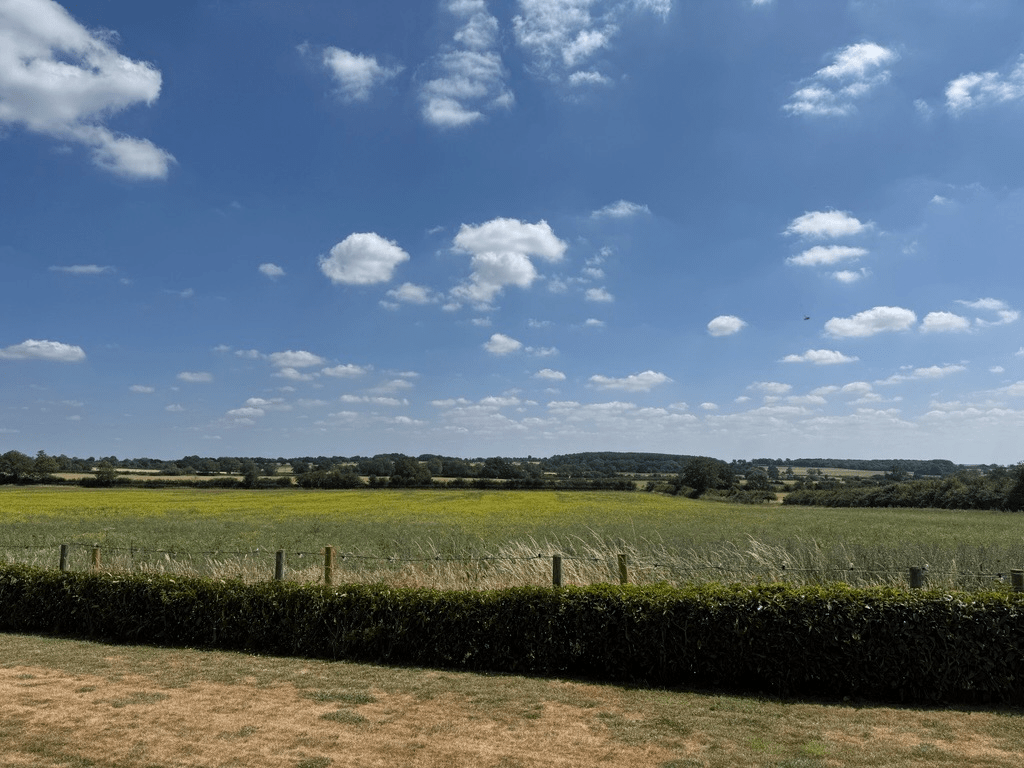
Whenever I get the chance, I escape back to the countryside, where I still call home despite making the move to London nearly a year ago. When the sun is out, all the doors are open, the fields are full of crops or cows, and the insects are buzzing, there is nowhere I feel more at peace and comfortable. That specific warmth of homelife, being with family in that soft silence interrupted only by the sound of bees and birds, is when I’m most at ease, and the most creative.
The city, especially London, offers its own kind of inspiration: fast, urgent, diverse, electric. It’s where ideas are visual. But it is only in the countryside that I truly begin to think for myself, rather than about something I’ve seen. I find boredom becomes a space to reflect. In the absence of noise, my inspiration gets turned into creativity.
For Francesca, it’s the opposite. “Boredom breeds more boredom,” she tells me. Her creativity comes not from stillness, but movement, change, spontaneity, and reconnection. “Creativity grows by living curiously rather than waiting for inspiration to strike,” she says. For her, a new book, an unexpected conversation, or even a different walk home can reset the creative compass.
Whilst I agree there’s nothing like walking around London to find a new character, or a new article idea, for me, it’s about having the space to think deeply after you’ve filled your mind with something worth exploring.

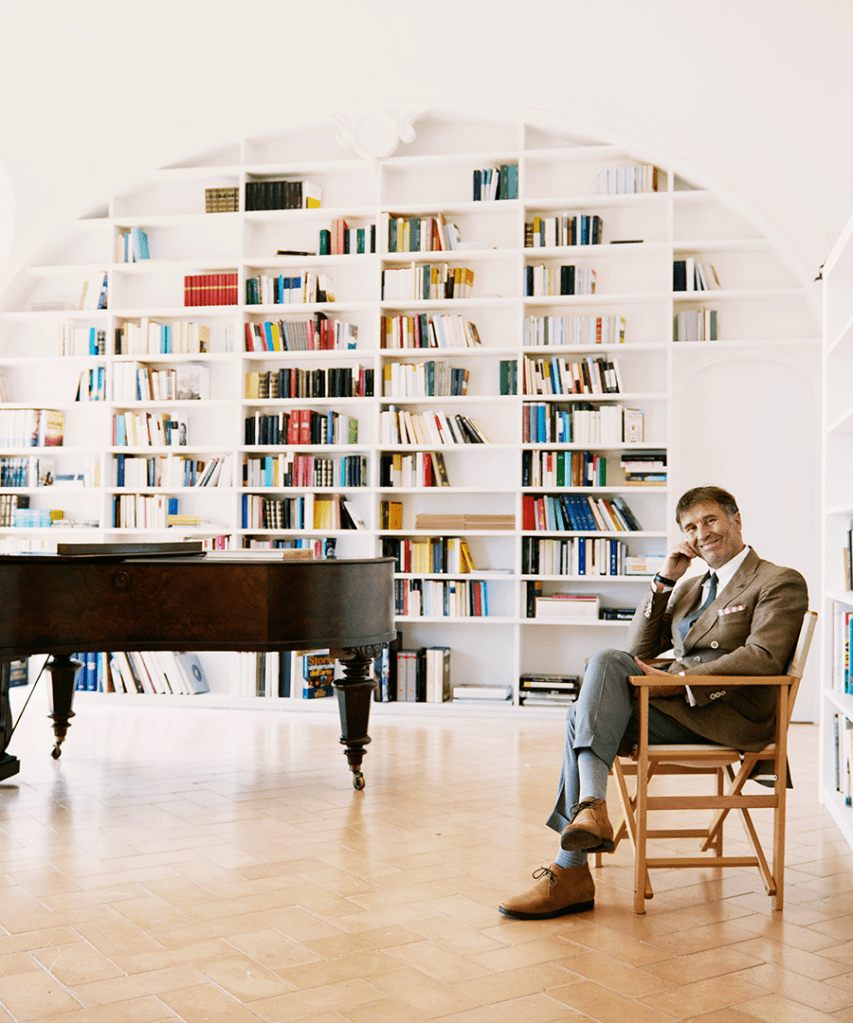
Brunello Cucinelli understands this dance. His headquarters in the medieval hamlet of Solomeo defy the logic of modern business and are described as ‘monastically peaceful’. Workers eat lunch with a view of hillsides. Their children go to school next door. He’s even set up a programme, the “why culture flourishes” scheme, giving employees €500 a year (double if you have children) to spend on books, films, magazines, training, and theatre. The mind, he believes, must be nourished as much as the body. “I live as an Italian,” he says. “I run my business as an Italian. But I think like an ancient Greek … and I like the Romans very much.”
There is something deeply Rousseauian about his approach. Not exile but intentional distance. Not retreat but reimagining. In the rolling hills of Umbria, Cucinelli has made space for a slower, more soulful capitalism, where work doesn’t consume life, but enhances it. And in doing so, he’s reminding us that we don’t have to run at the pace of the algorithm.

We both (and Cecilia too) seek something Rousseau might admire: space to rediscover ourselves.
Cucinelli’s vision isn’t about rejecting the modern world. He uses technology, runs a global brand, definitely lives in a different tax bracket than most, and gives keynote speeches. But he does it on his terms, at his rhythm. Guided, always, by presence and principle. His life is Rousseau’s ideal, updated, tailored, and stitched with care, which allows it to exist within the constraints of modernity.
And as I walk once more down countryside lanes, with London feeling far away, I’m reminded that the truest kind of dreaming happens here in the stillness, where I’m not running from the life I’ve built, but making space to imagine what else it could become, if I just slow down and let the mind wander.
Find the rest of the article about Brunello Cucinelli here
 BEYOND THE WORD