
Everyone’s talking about it: Jonathan Anderson is now the sole creative director of Dior. But what does this mean for the iconic fashion house? And what legacy did Maria Grazia Chiuri leave behind with her final collection?
Dior’s 2026 Cruise Collection was nothing short of breathtaking. Set against the historic backdrop of Rome, the collection unfolded like a love letter to Chiuri’s heritage, legacy, and unwavering creative voice. It left audiences stunned, tearful, and in awe. It was an emotional farewell to Chiuri’s visionary tenure. While whispers of her departure circulated at the time, the news became official on June 2nd: Jonathan Anderson has taken the reins as Dior’s sole creative lead.
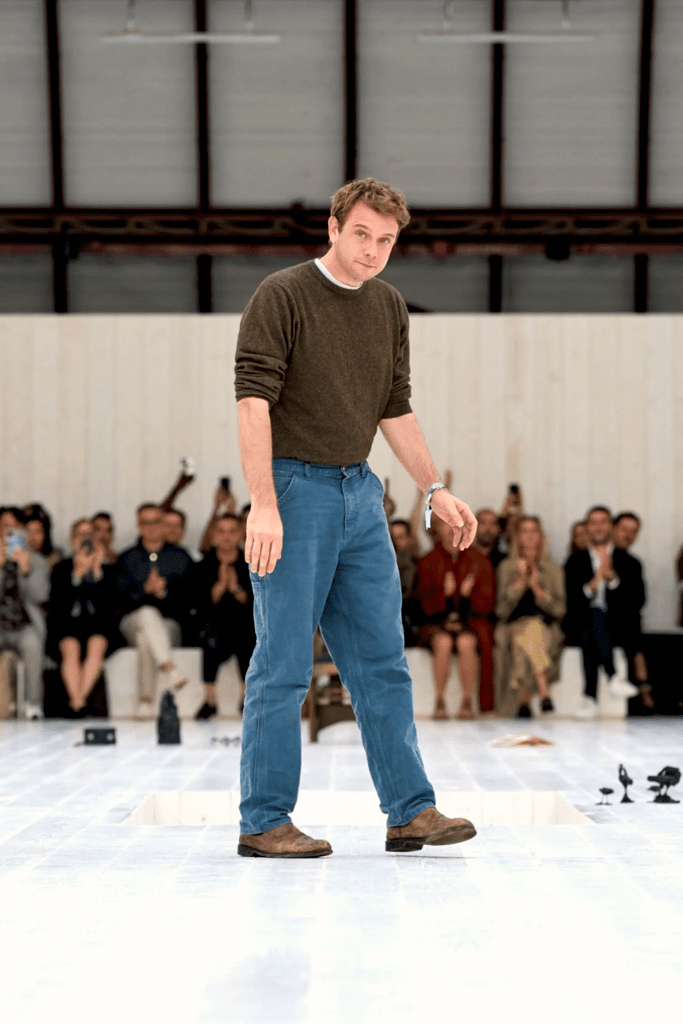
After being appointed as Dior’s menswear designer in April, Anderson’s expanded role marks a major shift in the industry. As reported by Business of Fashion, he is now poised to become the most prolific and multitasking designer since Karl Lagerfeld. For Dior, he will produce an ambitious ten collections annually, with four women’s, four men’s, and two haute couture. On top of that, he’ll continue creating six collections per year for JW Anderson and two more through his collaboration with Uniqlo.
Anderson has long blurred the lines between the conceptual and the wearable. At JW Anderson, he turned a pigeon clutch into a viral sensation and made asymmetry a wardrobe staple. His cerebral-yet-commercial touch could challenge Dior’s more traditional clientele but also attract a younger, digital-savvy generation. This is not just succession; it’s transformation.
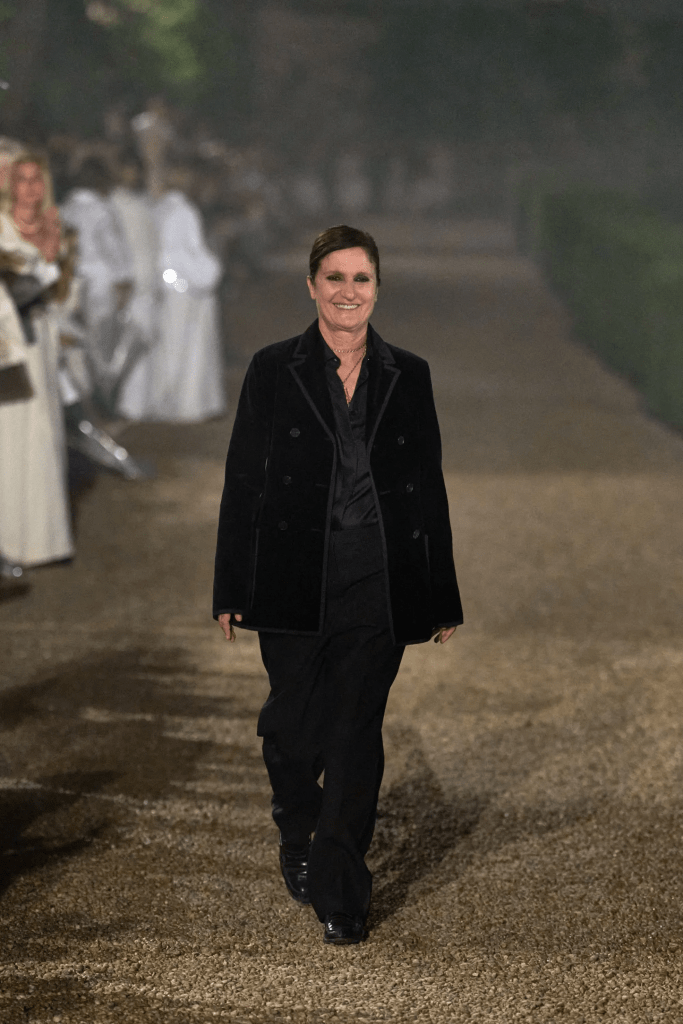
This moment feels like a generational handover. With Matthieu Blazy firmly in place at Chanel, the competition between the two houses is about to enter a new, creatively charged phase. Two fresh voices at the helm of fashion’s greatest maisons, each offering a radically different point of view. The playing field has never felt more level or more thrilling.
Moving into a new era makes Chiuri’s final bow at Dior even more poignant.
As the first female creative director in the house’s history, Chiuri broke new ground. Since her appointment in 2016, she has championed feminism, celebrated the arts, and reshaped Dior’s aesthetic through a powerful dialogue between masculine and feminine design.
Note her SS17 ‘We Should All Be Feminists’ T-shirt, which set the tone of her time at Dior from the get-go.
Her vision not only transformed Dior’s identity but also its business, quadrupling revenues with a masterful blend of commercial appeal and narrative depth.
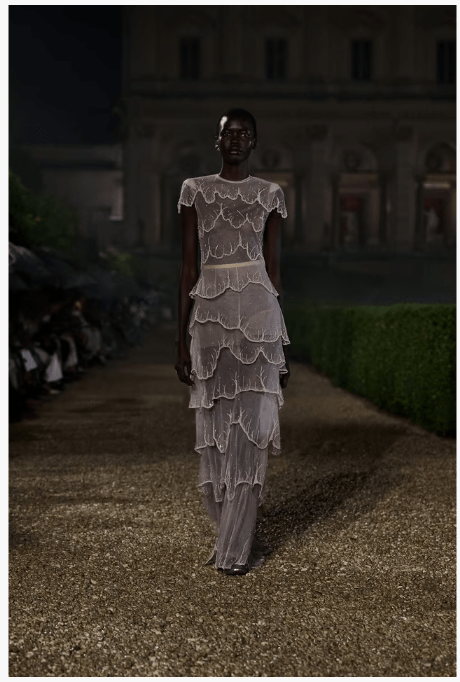
Choosing Rome, her hometown, for her final collection was no coincidence. It was a return to origin, a farewell wrapped in personal significance. She hadn’t shown a collection there since her days as co-creative director at Valentino, over a decade ago. This was her homecoming, both personal and professional, and it acted as a final act of grace and gratitude.
Dior isn’t trying to ignore Chiuri’s legacy, but instead, they commented on her “inspiring feminist perspective and exceptional creativity.”
The 2026 Cruise Collection was the perfect blend of femininity and structured tailoring. For this show, she collaborated with Tirelli Costumi, a Roman costume atelier founded in 1964.
This collaboration emphasised the craftsmanship at the heart of Chiuri’s Dior, where handwork met haute couture, and theatricality was never separate from substance. By working with a costume house, she reminded us that fashion has always been performative, and that identity is something we wear, construct, and reveal.
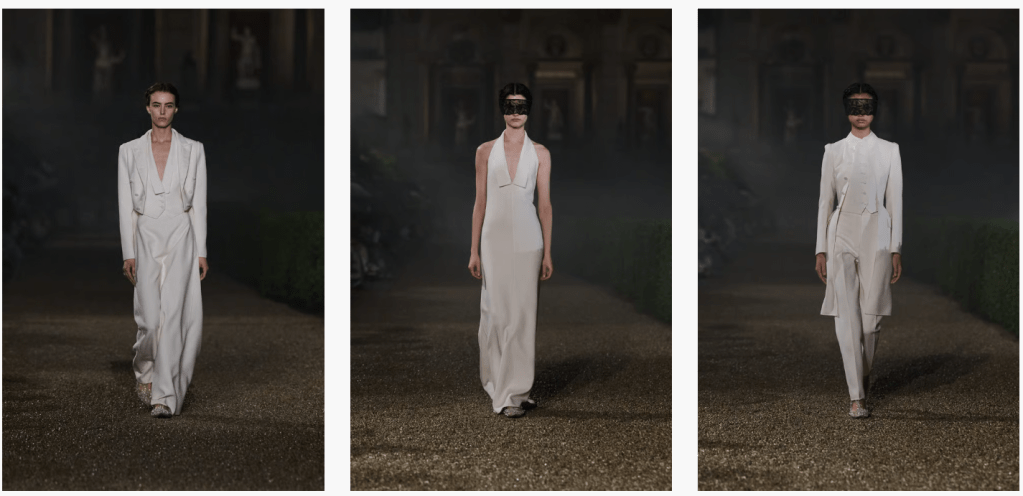
Audience response to her final show was immediate and emotional. Social media lit up with tributes, and fashion critics called it one of the most resonant farewells in recent memory. It felt like closure, not just for Chiuri, but for an era in which fashion and activism began to meaningfully intersect on the runway.
One comment on Instagram said, “heartbroken. Under her creative leadership, Dior blossomed into a symbol of empowered femininity.”
As Anderson steps in, the question isn’t whether he can match her legacy because their visions are inherently different, but how he’ll redefine Dior on his own terms. Will he lean into irony or intimacy? Couture spectacle or ready-to-wear rebellion? Either way, the stage is set.
One era closes with grace. Another begins with anticipation. Dior, as always, is at the centre of the conversation and fashion history is being written in real time.
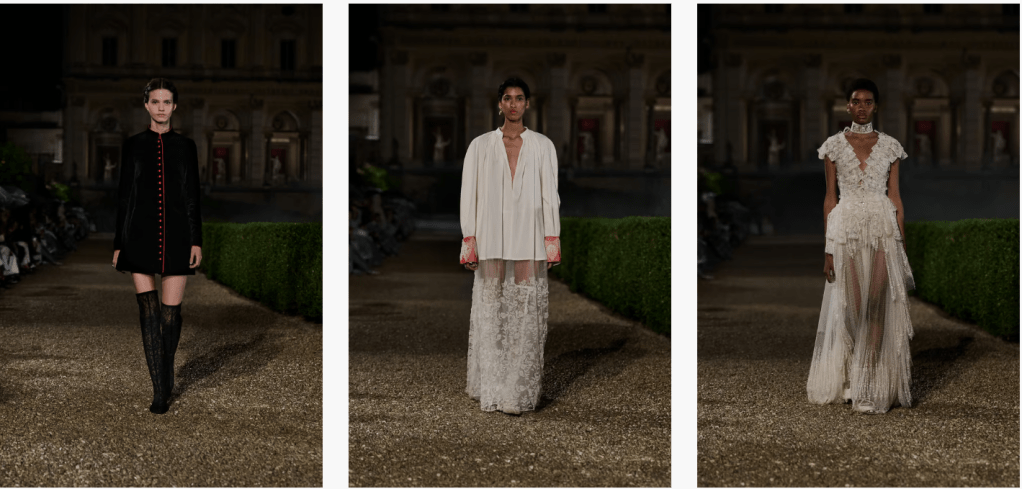
Find the rest of the collection here
 BEYOND THE WORD